IPO fever: when private giants go public

A new generation of extremely large private companies could soon become available to public investors. In this introductory explainer, we look at why this has garnered such publicity, what potential impact this might have on equity indices and how investors might be impacted.

09 Jun 2026
IPO-insight-banner.png

Why is everyone talking about mega-cap IPOs?

Every so often, a company comes to the stock market that captures the public imagination and much like London buses it appears that three will arrive in quick succession, namely SpaceX, Anthropic and OpenAI. These are not ordinary IPO candidates as these private companies are associated with some of the biggest investment themes such as space infrastructure, artificial intelligence and cloud computing.

For investors, the excitement is understandable. These are businesses that many people already recognise, even though they are not yet listed on a stock market. An important question for investors to consider is "how might these companies affect my portfolio, even if I never buy the shares directly?".

This is pertinent as once a company lists, it may eventually enter major equity indices, such as global, US, technology or growth benchmarks and investors are exposed to these indices indirectly through funds that are benchmarked against these major indices.
An overview of the three IPO candidates

Company

Expected equity sector

Nature of business

SpaceX

Industrials or communication services

Aerospace, satellite connectivity & space-infrastructure designing, manufacturing and launching rockets /spacecraft, with Starlink as a major business line.

OpenAI

Info tech: likely application software

AI research and deployment commercialising frontier models, ChatGPT, APIs, Codex and enterprise AI infrastructure.

Anthropic

Info Tech: likely application software

AI safety and research building frontier AI systems and Claude for enterprise, coding and productivity use.

Initial Public Offering and other important terms

  • An Initial Public Offering, (IPO), is when a private company sells shares to public-market investors for the first time. After an IPO, the shares can usually be bought and sold on a stock exchange.

  • Market capitalisation is the total value of the company’s shares. If a company has 10 billion shares and the share price is £10, the market capitalisation is £100 billion.

  • Free float is the portion of the company’s shares that can be traded by public investors. This is different from total company value. A company might be worth hundreds of billions of dollars on paper, but only a small percentage of its shares may be available to trade immediately after IPO.

  • Float-adjusted market capitalisation is the value used by many indices. It focuses on the shares that are realistically available to investors, rather than all shares in existence.

  • Lock-up period is a period after an IPO during which “insiders” (employees, early investors and large private shareholders) are restricted from selling their shares. Lock-up agreements prohibit “insiders” from selling for a set period after an IPO. Lock-up information is usually disclosed in the IPO prospectus.

Why these IPOs are different: private scale, not just IPO hype

Historically, companies came to market when they were still relatively young and needed public capital to grow. Today, some of the most prominent private companies can raise enormous sums privately before ever listing on a stock exchange. That means public-market investors may be accessing these businesses later in their development, at much higher valuations. This does not automatically make them safer. Larger does not always mean lower risk. But it does make them different from the classic image of an IPO as a small, early-stage business seeking growth capital.

To provide some historic context to the IPO size, we have provided a comparison below of these three Mega Caps versus the current top 10 largest IPOs of all time.

Company

Listing exchange

IPO date

IPO size

IPO % of Market Cap (free float)

IPO 1

SpaceX

NASDAQ

12th June 2026

$75bn

4.2%**

IPO 2

OpenAI

NASDAQ

TBC

$122bn*

14.3%**

IPO 3

Anthropic

NASDAQ

TBC

$65bn*

6.7%**

1

Aramco

Tadawul

Dec'19

$26bn

2

Alibaba

Shanghai Composite

Sep'14

$22bn

3

SoftBank

Nikkei

Nikkei

$21bn

4

NTT

Nikkei

Oct'98

$18bn

5

Visa

S&P 500

Mar'08

$18bn

6

AIA Group

Hang Seng

Oct'10

$18bn

7

Enel

Euro Stoxx 50

Nov'99

$17bn

8

Facebook (Meta)

S&P 500

May'12

$16bn

9

General Motors

S&P 500

Nov'10

$16bn

10

ICBC

Shanghai Composite

Oct'06

$14bn

Free Float = IPO size / Market Capitalisation

Open AI & Anthropic have not disclosed an IPO size so estimates shown are the size of their latest private funding rounds. *SpaceX IPO value of $75bn (555.6m shares at $135) projects a total market capitalisation of $1.77trn off which the free float is based. OpenAI's market cap of $852bn (referencing OpenAI's own funding round post-money valuation) and Anthropic's market cap of $965bn (referencing Anthropic's latest Series H funding round on May 28, 2026).

What impact will this have on the composition of equity indices?

The answer here depends on the equity index in question as there are no consistent inclusion rules from one index provider to the next.

A mega-cap IPO can create a problem for index providers. On the one hand, if a company is enormous, excluding it for too long may make the index less representative of the market. On the other hand, including it too quickly may force passive funds to buy a company with limited trading history, limited free float or uncertain profitability.

Different index providers have proposed different approaches:

  • MSCI has large-IPO fast-track rules in its Global Investable Market Index methodology dating back to 2007. A large US IPO can be included after 10 trading days if it meets size thresholds.

  • S&P DJ Indices has decided not to fast-track mega-cap IPOs into the S&P 500. IPOs still need at least 12 months of trading history, profitability, liquidity, and a minimum 10% investable weight factor/free float before they can even be considered.

Two clients could both say they own "US equities" or "global equities" and still experience different exposure to the same IPO, depending on which index their fund follows.

Two clients could both say they own "US equities" or "global equities" and still experience different exposure to the same IPO, depending on which index their fund follows.

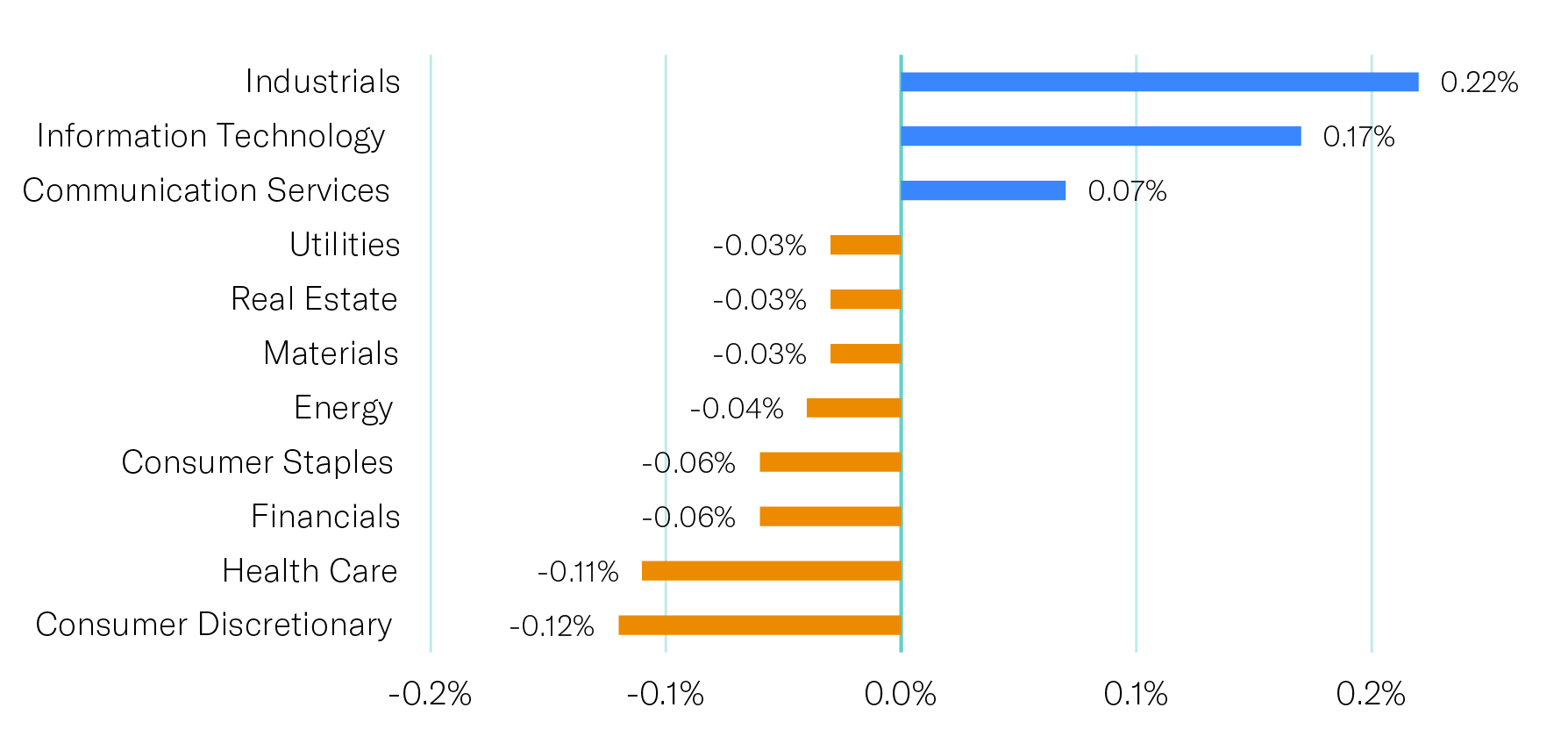
MSCI USA: Index changes appear to be marginal

Initial sector moves appear to be moderate with a higher weight to Industrials, Info tech and Communication services at the expense of Consumer Discretionary and Financials.

MSCI-USA-graph

Free Float = IPO size / Market capitalisation

*Open AI & Anthropic have not disclosed an IPO size so estimates shown are the size of their latest private funding rounds. **SpaceX IPO value of $75bn (555.6m shares at $135) projects a total market capitalisation of $1.77trn off which the free float is based. OpenAI's market cap of $852bn (referencing OpenAI's own funding round post-money valuation) and Anthropic's market cap of $965bn (referencing Anthropic's latest Series H funding round on May 28, 2026).

Timeline and sequence of events

Mega-cap IPOs should be thought of as a process, not a single event.

Stage 1: before the IPO

The company remains private. Valuations may be discussed in the press or implied by private funding rounds, but public investors do not yet have the full information they would expect from a listed company. This is the period when excitement is often highest and hard facts can be limited.

Stage 2: IPO day

The company begins trading. Demand may be high, especially if the brand is well known. But the number of shares available may be limited. This can create sharp price moves.

Stage 3: Lock-up expiry

More shares may become available as insiders, employees and early investors are allowed to sell. This can increase supply and create volatility.

What impact does this have for my equity exposure?

There are some practical considerations to note:

  • On the day of index inclusion, the magnitude of change is marginal. As more private investors are released from their lockup periods more shares become publicly available with index weight also increasing, all else equal.

  • Timing and extent of impact depends on index provider. MSCI is set to fast-track inclusion whereas S&P has chosen to take a slower, more considered approach so the impact here is delayed.

  • US equity exposure likely to increase at the margin. MSCI’s modelling suggests the aggregate of mega-cap IPOs could increase the US weight in global benchmarks.

  • Technology exposure could be reorientated. We anticipate larger tilts to AI infrastructure, cloud computing and digital platforms.

Conclusion: excitement is not a plan

The arrival of very large private companies on public markets may be an important development. It may change index composition, fund exposure and the balance between public and private-market growth. But for long-term investors, the right response is not to chase the noise. It is to remain diversified, valuation-aware and focused on the role each investment plays in the overall portfolio.